
Myles Himmelreich has struggled with significant joint pain since he was a teen, yet he didn’t get a proper diagnosis of arthritis until he was in his mid-30s. His young age and the fact he is diagnosed with fetal alcohol spectrum disorder may have prevented doctors from considering testing his joints sooner — a problem…
Author: Linda Givetash
Linda Givetash is a Canadian-South African freelance journalist based in Vancouver, B.C. Her work has appeared in print, digital and broadcast media outlets around the globe.
How drug potency and online ordering are fuelling Canada’s opioid crisis
VANCOUVER — Illicit drugs have always been a problem in port cities, but experts say the emergence of highly potent synthetic opioids that are fuelling British Columbia’s overdose crisis are slipping through borders in new ways, presenting challenges for law enforcement. International regulations, online ordering and the potency of the drug are among the factors…
Some sex workers choose industry due to benefits of occupation: study
Some sex workers are choosing the industry because it can be more lucrative and rewarding than low-paying service industry jobs, says a recent study by a researcher at the University of Victoria. Prof. Cecilia Benoit, a scientist at the Centre for Addictions Research of B.C., said she’s heard a variety of reasons why sex workers…
Caregiving takes toll on finances, career, health
For three years, Heidi Hudson spent her days caring for her ailing father and her nights working on the few contracts she could pick up to support herself. Doctors would say her father, who suffered serious complications following a routine kidney operation, was dying. But as he enjoyed periods of recovery, her role as a…
B.C. climate plan needs carbon tax hikes, major policy changes: experts
VANCOUVER — Experts say they’re not sure British Columbia’s overdue climate change plan will go far enough in increasing carbon taxes and tightening environmental policies to reach the province’s long term goals to reduce emissions. B.C.’s Liberal government is scheduled to announce its Climate Leadership Plan on Friday, but Green party Leader Andrew Weaver said…
Male sex workers in Vancouver feel safer on the internet than on the street
A study on male sex workers in Vancouver has found that although the move to selling sex online rather than on the streets improved safety, a recent law prohibiting the advertisement of sex online may be driving the industry further underground. The study by the B.C. Centre of Excellence in HIV/AIDS and the outreach program Hustle surveyed 39 men…
Uganda’s youth are choosing peace hashtags over violence as elections loom
KAMPALA — At a bustling Kampala market, Desire Karakire listens to a group of young men express their frustrations over the state of their country. Like most of their peers, they’re underemployed and extremely poor—and they feel the only way the situation will change is through violent revolution. “Leadership involves blood,” says Richard Ssenyoga, 23….
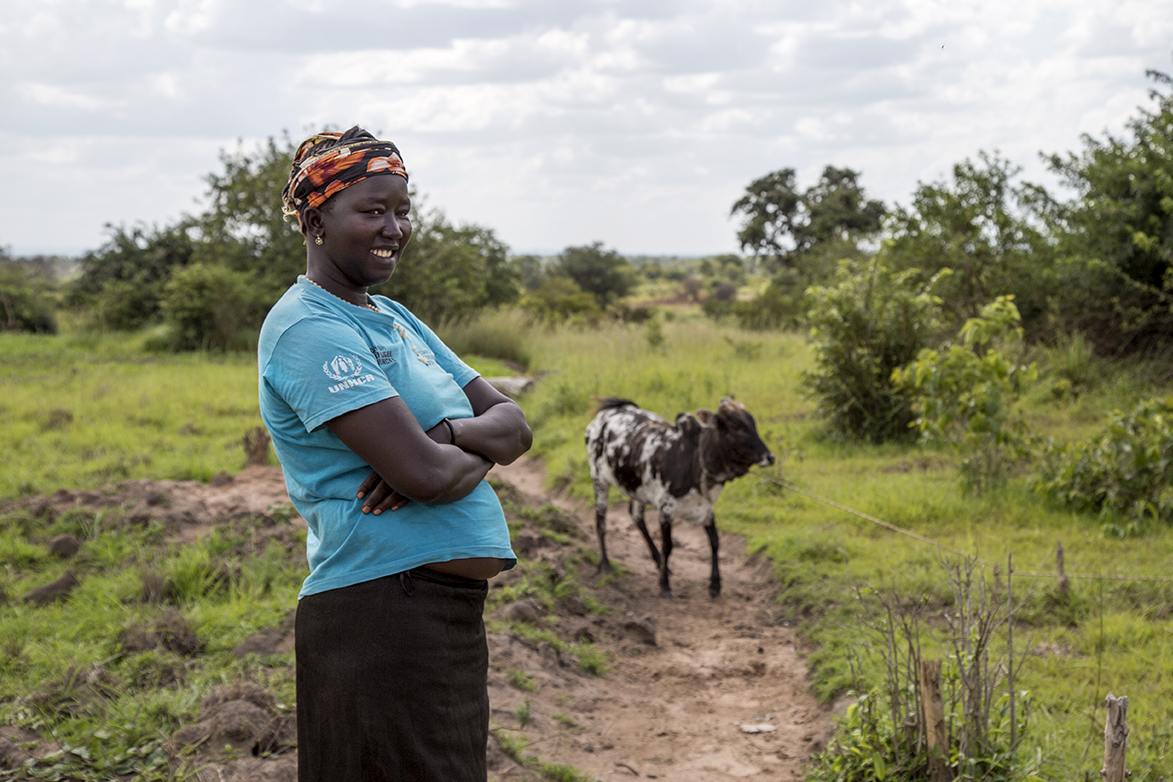
How Uganda’s economy has received a boost from hosting refugees
On a small farm in northwestern Uganda, Nyantet Malual proudly shows off the cow she bought with earnings from her last harvest. The ability to own property and provide for her family was only a dream for the South Sudanese refugee when she arrived in the country two years ago. “Now I’m sitting here, I…
Out of the shadows
In rural West Africa, this treatment takes its most violent form with those suffering from mental disorders often left outdoors in the elements, chained to trees for years on end and regularly whipped to force “evil spirits” to leave their bodies. — ALJAZEERA
Praying for a cure
In West Africa, hundreds of people with mental illness live in awful conditions. One organization is fighting for a new approach to treatment.
Rising to meet the demand for palliative care
ARUA, UGANDA — There were no health workers dedicated to palliative care in the West Nile region when Lucy Agaboru first learned of the treatment over 15 years ago — but that has since changed dramatically. Ms. Agaboru is now the head of a palliative care unit at Arua Regional Referral Hospital. It’s a role she…
Canada needs to invest in new hospitals, says health care association
Dr. Richard Johnston knew the health care system was in trouble when he walked down a hallway at University of Alberta Hospital and saw an older woman housed in a linen closet instead of a proper room.
Happy at home
Seventy-year-old Paul Morrison is among 700,000 Canadians living with Alzheimer’s disease or dementia. Despite the diagnosis, Morrison continues to live alone in his Vancouver home. This story is about the people and resources helping Morrison maintain his independence.
A source of hope in early-onset dementia
Retired nurse Nita Levy and her husband, Michael, a retired accountant, established Paul’s Club in 2012. They were inspired to create a program appropriate for people’s ages and abilities after their brother-in-law, Paul, died as a result of early-onset dementia.
Enrolment at private schools growing after B.C. teachers’ strike
Enrolment at independent schools across British Columbia has spiked this year, and the 2014 five-week public-school teachers’ strike is part of the reason, says a spokesman for a group representing private institutions.
Open enrolment policies raise test scores, report says
Apolicy change that gave parents greater choice in where to enroll their children encouraged B.C. schools to “up their game” and improved students’ test results, a new report says.
Downtown Eastside businesses look to improve relations with residents
Businesses in Vancouver’s Downtown Eastside are collaborating with local activists and community groups to improve relations with local residents.
Ministry questioned over $350,000 social media campaign during BCTF strike
Teachers and politicians are questioning the B.C. Ministry of Education for spending more than $350,000 on a digital media campaign during the teachers strike last year.
Yes campaign looks to student voters for support in transit plebiscite
About 105,000 students are eligible to vote in the transit plebiscite, and many of them use public transit, said Bahareh Jokar, co-chair of the Better Transit and Transportation Coalition.
First Nations leaders highlight ‘massive need’ for reform in mining industry
First Nations leaders say regulatory changes for the mining industry are needed to prevent a repeat of the Mount Polley tailings dam collapse.